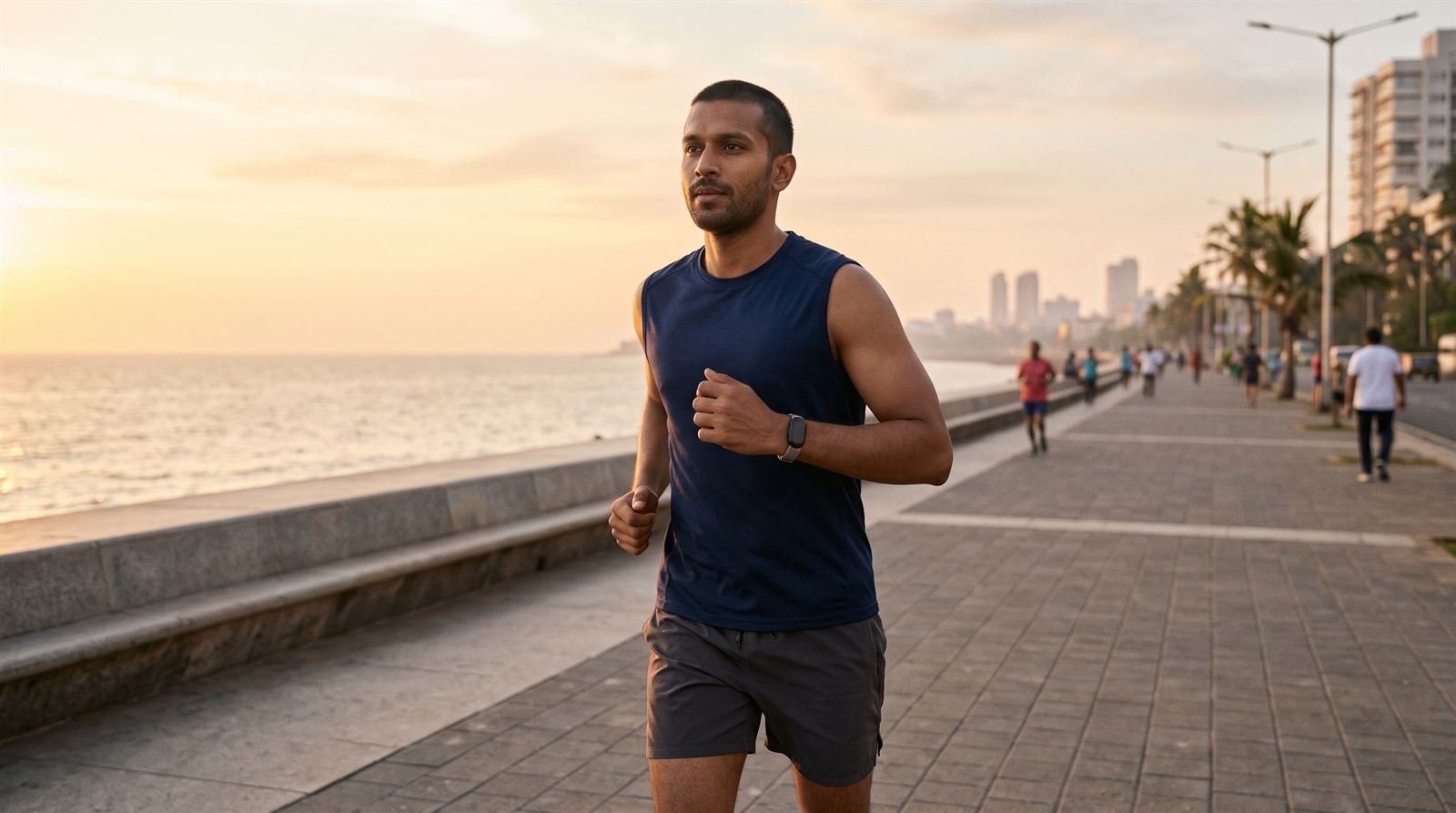
Walking is the most underrated exercise there is. It's free, it's easy on the joints, and you can do it in office clothes. It also adds up: a short walk after each meal can make a real difference to your daily total.
Do you really need 10,000 steps?
The 10,000-step target started as a round number, not a medical rule. Large studies suggest that health benefits keep rising as people walk more, up to roughly 7,000 to 10,000 steps a day for many adults. The biggest gains come from moving from very few steps to a moderate number. Going from 3,000 to 6,000 steps matters far more than going from 11,000 to 14,000.
So the right target is simple: a little more than you do now.
Find your starting point
Wear your fitness band normally for a week without trying to change anything. That average is your baseline. Then aim to add about 1,000 to 2,000 steps a day, and hold that for a couple of weeks before adding more.
10 easy ways to walk more in a busy day
- The 10-minute after-meal walk. After lunch and dinner. It's also a pleasant way to wind down.
- Walk-and-talk calls. Take phone calls standing or walking.
- Stairs, not lifts, for the first few floors.
- Park or get off a stop early and walk the rest.
- Walk to the chai or water point on another floor.
- A movement break every hour at your desk.
- Evening walks with family or the dog.
- Walk to the local market for small purchases.
- Pace while you wait for the metro, a lift or a meeting to start.
- Make one weekend morning a long walk in a park or around a lake.
Beat the heat and the rain
In summer, walk early in the morning or after sunset, and carry water. In the monsoon, malls, covered markets, metro stations and even walking indoors at home all count. A few minutes of brisk walking around the house during TV ads adds up.
Pace matters too
A comfortable stroll is great. But adding some brisk walking, where you can talk but not sing, turns walking into moderate exercise. That counts towards the commonly recommended 150 minutes of moderate activity a week for adults.
How a fitness band helps you walk more
- It shows your real baseline. Most people guess wrong, in both directions.
- It makes small wins visible. Seeing your weekly average rise is motivating.
- It shows intensity, not just steps. Heart rate tells you whether a walk was a stroll or real exercise.
- It links activity to sleep and recovery. Many people notice they sleep better on days they move more.
SynQ is a screenless fitness tracker band, so it's light and easy to wear all day without notifications pulling you back to your phone. You check your trends when you choose to.
Want a next step after walking? Our 12-week run-walk plan takes beginners to 10 km.
Start today: add one 10-minute walk after dinner. That's roughly 1,000 extra steps, and it's one of the easiest habits to keep.
This article is general wellness information, not medical advice. SynQ is a wellness product, not a medical device, and does not diagnose, treat or prevent any condition. If you have a health condition, are pregnant, or are worried about your sleep, heart rate or fitness, please speak to a doctor before changing your routine.