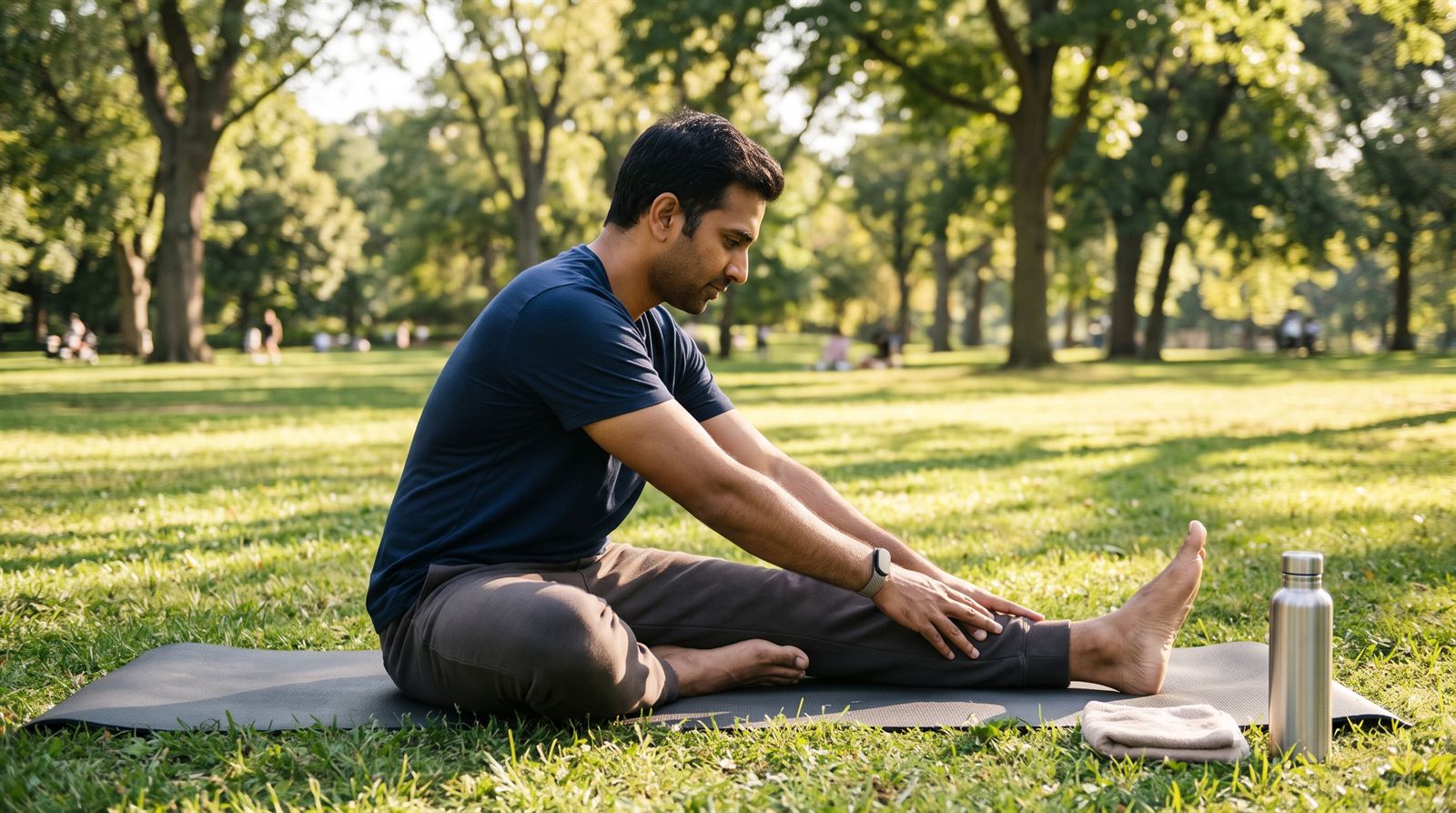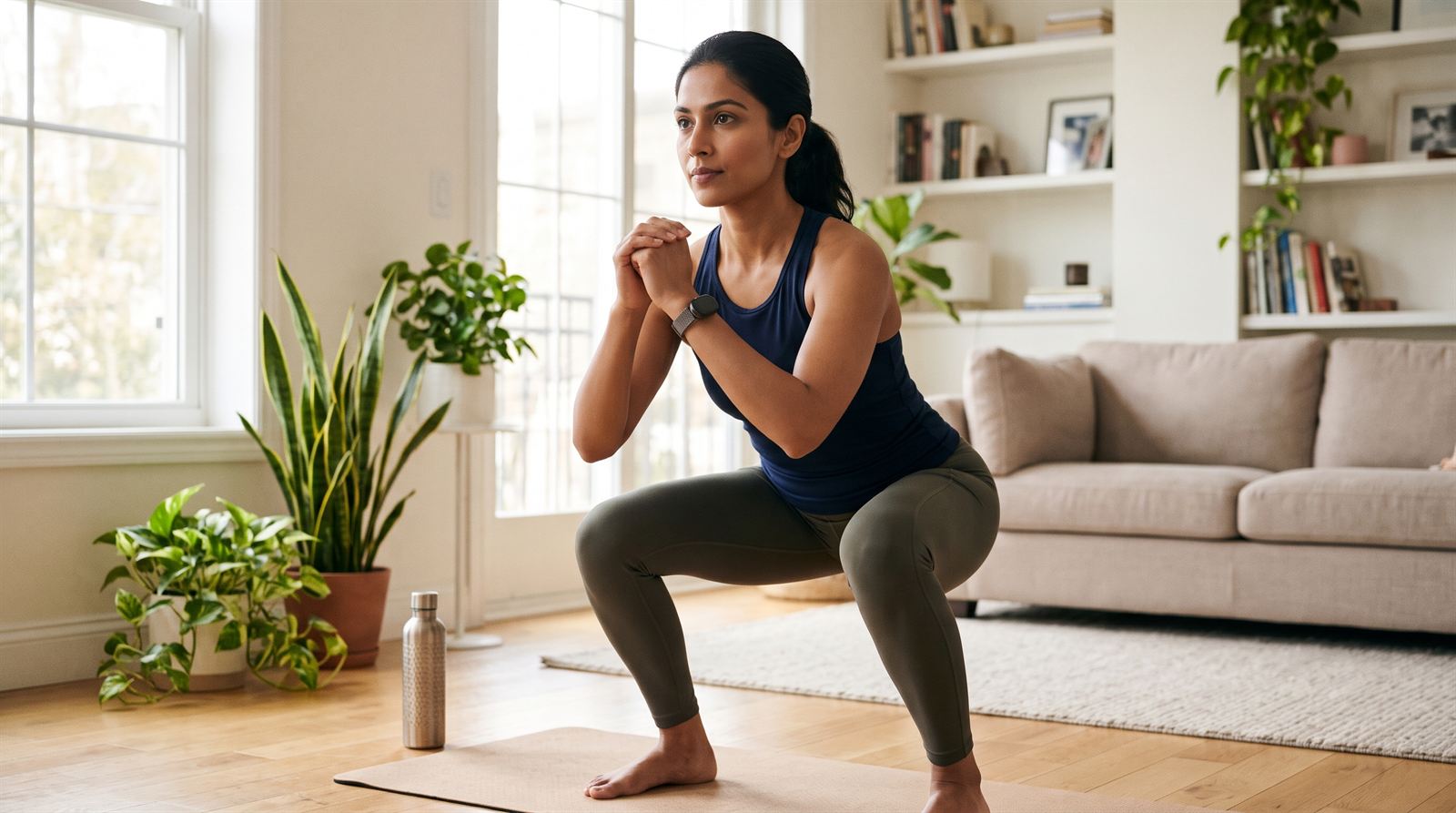
Walking, running, cycling, a game of badminton, a dance class: all exercise is good exercise. But if you want to improve your fitness steadily without burning out, it helps to know how hard you're actually working. Your heart rate is one of the simplest ways to measure that.
How much exercise do you need?
The World Health Organization recommends that adults aim for 150 to 300 minutes of moderate activity, or 75 to 150 minutes of vigorous activity, each week, plus muscle-strengthening on at least two days. That's about 30 minutes, five days a week, of brisk walking or similar.
What are heart-rate zones?
Heart-rate zones split your effort into bands, based on a percentage of your maximum heart rate. A common rough estimate of maximum heart rate is 220 minus your age. It's only an estimate, and real maximums vary a lot between people, but it's a reasonable starting point.
For a 35-year-old, the estimate is 220 − 35 = 185 beats per minute.
| Zone | % of max HR | Example (age 35) | How it feels |
|---|---|---|---|
| 1 · Very easy | 50–60% | 93–111 bpm | Easy walk, warm-up, recovery |
| 2 · Easy | 60–70% | 111–130 bpm | You can talk in full sentences |
| 3 · Moderate | 70–80% | 130–148 bpm | Talking in short phrases |
| 4 · Hard | 80–90% | 148–167 bpm | A few words at a time |
| 5 · Maximum | 90–100% | 167–185 bpm | Short all-out efforts only |
The big mistake: everything in the middle
Many people do every workout at a "moderately hard" effort: not easy enough to recover from, not hard enough to push their limits. Many endurance coaches recommend a different balance: most of your training easy (zones 1 to 2) and a smaller amount properly hard (zones 4 to 5).
- Easy zone 2 work builds your aerobic base, the foundation of fitness, and you can do lots of it without wearing yourself out.
- Short hard sessions, such as intervals, improve your top-end fitness.
If you're a beginner, almost everything can be zone 2: brisk walking, easy cycling, gentle jogging.
How a fitness tracker band helps during exercise
- It shows your real intensity. Many people find their "easy" run is actually in zone 3 or 4.
- It tracks time in each zone, so you know whether you hit your weekly targets.
- It shows progress. As you get fitter, the same pace or route usually needs a lower heart rate.
- It flags heat and fatigue. A much higher heart rate than usual for the same effort can mean heat, dehydration, poor sleep or illness. That's a day to ease off.
And after exercise: recovery
The other half of training is what happens afterwards. A band that tracks your sleep, resting heart rate and HRV helps you decide whether tomorrow should be a hard day or an easy one. That's the core of what SynQ is being designed for: plain-language guidance on when to push and when to recover. See our guide to rest days and active recovery.
Getting accurate heart-rate readings
Wrist-based heart rate is generally good for steady activities like walking, running and cycling. For the best readings:
- Wear the band snug, about a finger's width above your wrist bone.
- Tighten it slightly during workouts, and loosen it afterwards.
- Expect some lag during very fast changes in effort, such as sprints, and in activities with lots of wrist movement or gripping.
SynQ's woven stretch strap is designed for a comfortable, secure fit, which helps readings during movement.
Training for an event? Put your zones to work with our Mumbai Marathon 2027 training guide or our 12-week 10K plan for beginners.
This week: do three 30-minute sessions where you keep your heart rate in zone 2, at a pace where you can still hold a conversation. It may feel slow. That's the point.
If you have a heart condition, take medication that affects heart rate (such as beta-blockers), or are new to exercise, ask your doctor which intensity is safe for you. Heart-rate formulas may not apply to you.
This article is general wellness information, not medical advice. SynQ is a wellness product, not a medical device, and does not diagnose, treat or prevent any condition. If you have a health condition, are pregnant, or are worried about your sleep, heart rate or fitness, please speak to a doctor before changing your routine.