Deadlines, traffic, family responsibilities, money worries. Some stress is a normal part of life, and short bursts of it can even help you perform. The problem is stress that never switches off. Over time it can affect your sleep, mood, digestion and energy.
You can't remove every stressor. But you can train your body to recover from stress faster, and slow breathing is one of the simplest ways to do it.
Why breathing works
Your nervous system has two broad modes: "fight or flight" (alert, heart rate up) and "rest and digest" (calm, heart rate down). You can't easily tell your heart to slow down, but you can control your breathing, and slow, steady breathing nudges your body towards the calmer mode.
Traditional pranayama practices have used this idea for centuries. Modern research on slow breathing, often around 5 to 6 breaths per minute, suggests it can help many people feel calmer and may support higher HRV during and after the practice.
The 5-minute habit
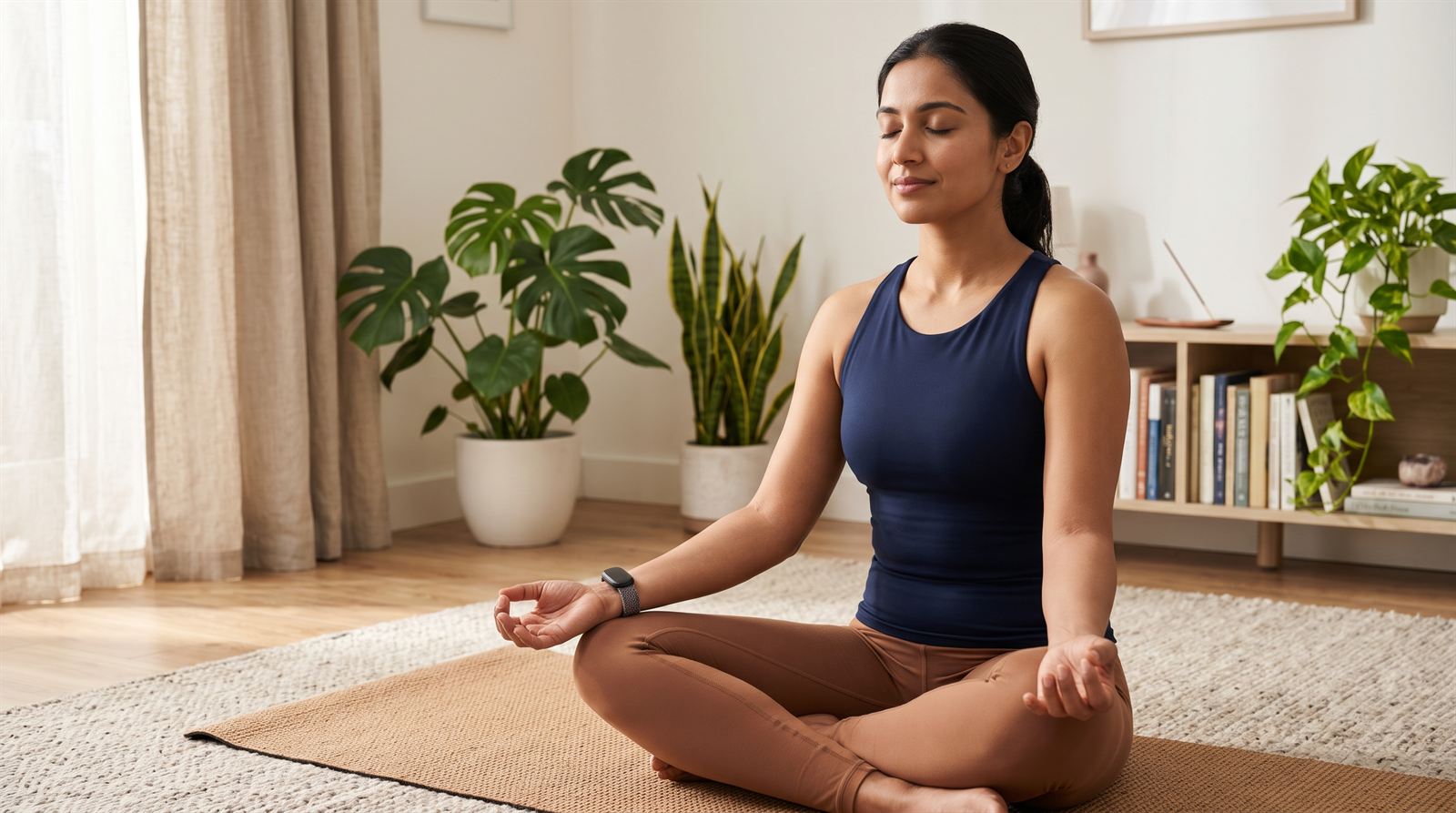
- Sit comfortably with your back straight, or lie down.
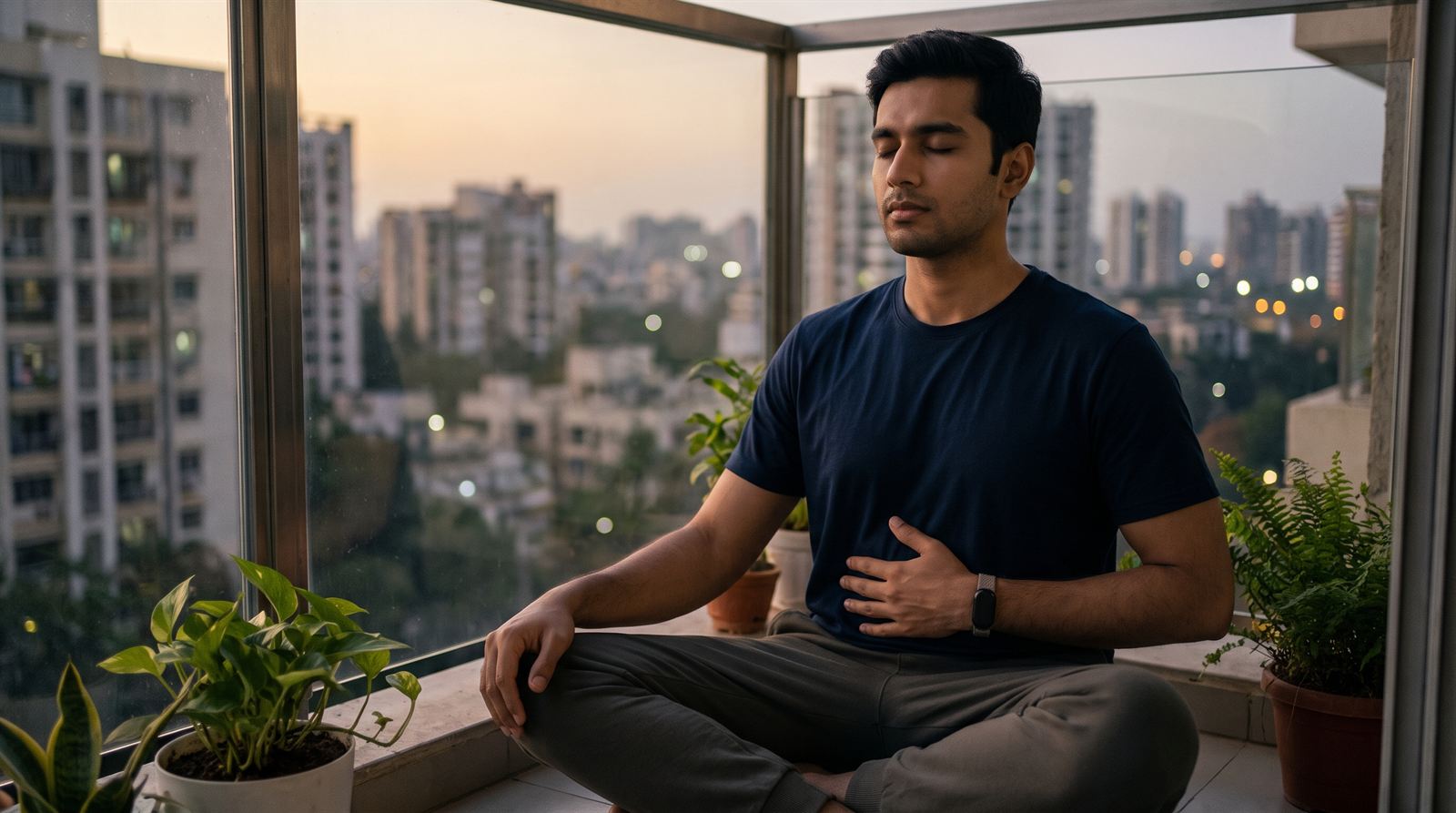
- Breathe in through your nose for about 4 to 5 seconds, letting your belly expand.
- Breathe out slowly for about 5 to 6 seconds, through the nose or gently through pursed lips.
- Keep it smooth and comfortable. Never strain or hold your breath forcefully.
- Continue for 5 minutes.
The best times are when you wake up, after lunch, before an important meeting, or as part of your bedtime wind-down. If you feel dizzy, return to normal breathing.
Other habits that lower everyday stress
- Move every day. Even a brisk 20-minute walk helps.
- Protect your sleep. Poor sleep makes everything feel more stressful.
- Time outdoors, especially in green spaces and morning light.
- Phone-free time in the evening (see our screen-time guide).
- Talk to people. Friends, family or a counsellor. Asking for support is a strength.
What your HRV says about stress
Heart-rate variability (HRV) is the tiny variation in time between your heartbeats. When your body is relaxed and recovered, HRV tends to be higher than your own usual. When it's under strain from stress, poor sleep, illness, alcohol or hard training, HRV tends to be lower.
That makes HRV a useful stress gauge, with two important rules:
- Compare only with yourself. HRV varies enormously between people.
- Look at trends. One low morning means little. A week of low readings is worth noticing.
How a stress tracker band helps
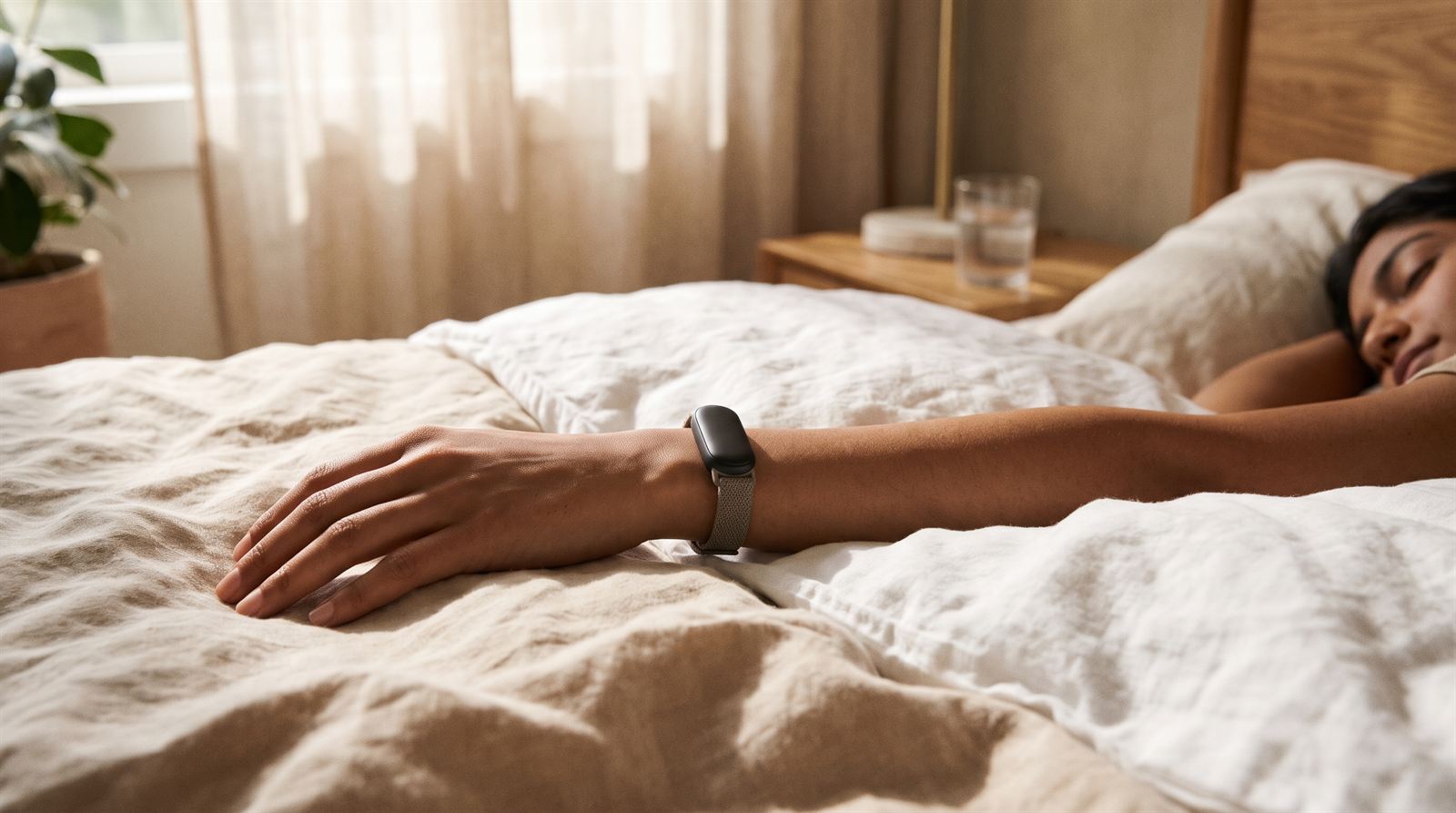
A band like SynQ measures your heart rate and HRV during sleep, when the readings are most reliable, and shows you trends over time. That lets you:
- Spot stress building up before you feel burnt out, for example a run of lower HRV and higher resting heart rate during a tough week at work.
- See what helps you personally. Does a daily breathing habit, an evening walk or an earlier bedtime show up as better recovery over a few weeks?
- Make kinder decisions. On a high-strain day, choose a walk or yoga instead of an intense workout.
Try this: do the 5-minute breathing habit every evening for three weeks. Compare your average HRV and how rested you feel with the three weeks before.
If stress or anxiety is affecting your daily life, please reach out to a doctor or mental-health professional. In India, you can also call the government's free Tele-MANAS mental-health helpline on 14416.
This article is general wellness information, not medical advice. SynQ is a wellness product, not a medical device, and does not diagnose, treat or prevent any condition. If you have a health condition, are pregnant, or are worried about your sleep, heart rate or fitness, please speak to a doctor before changing your routine.