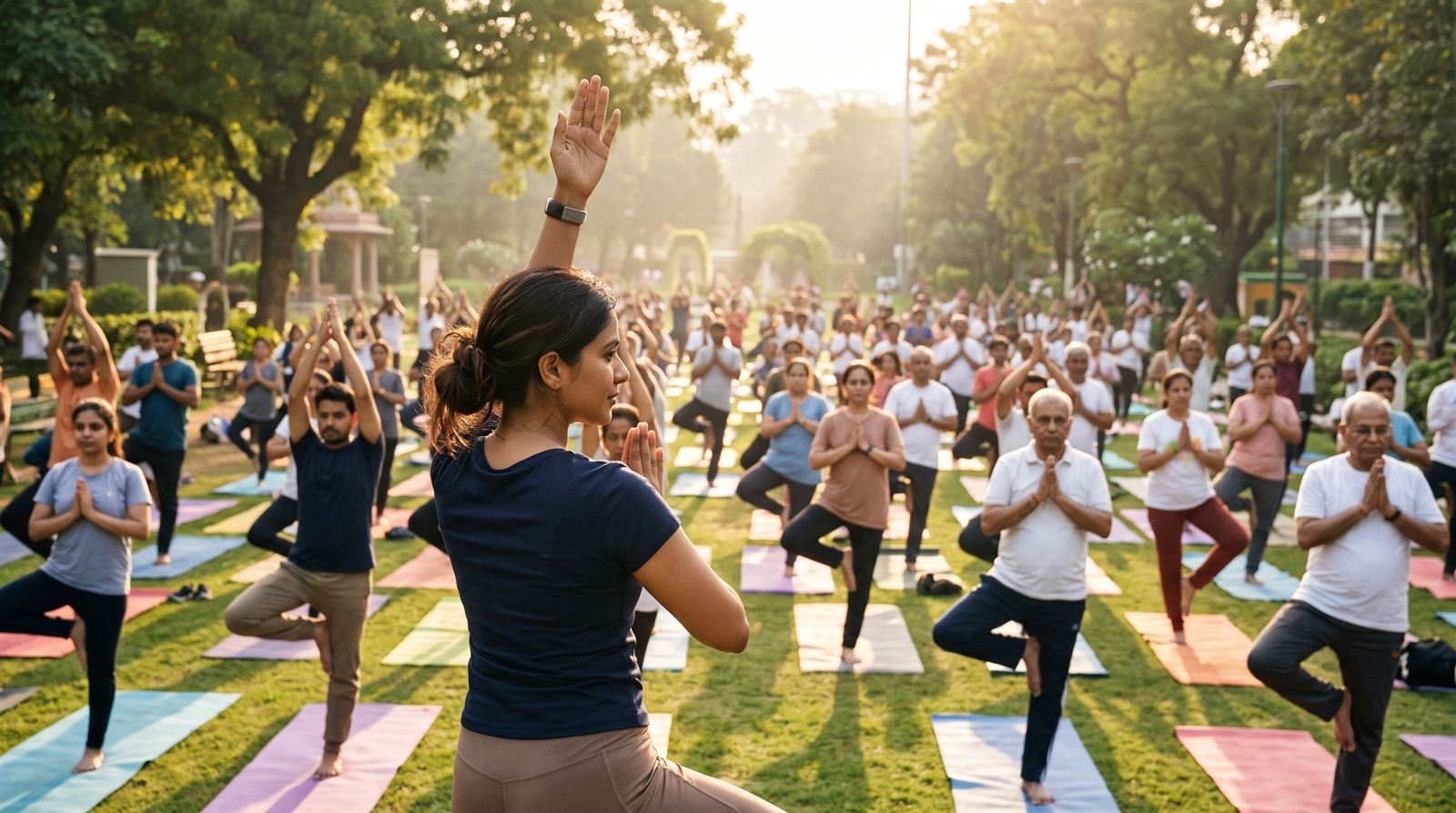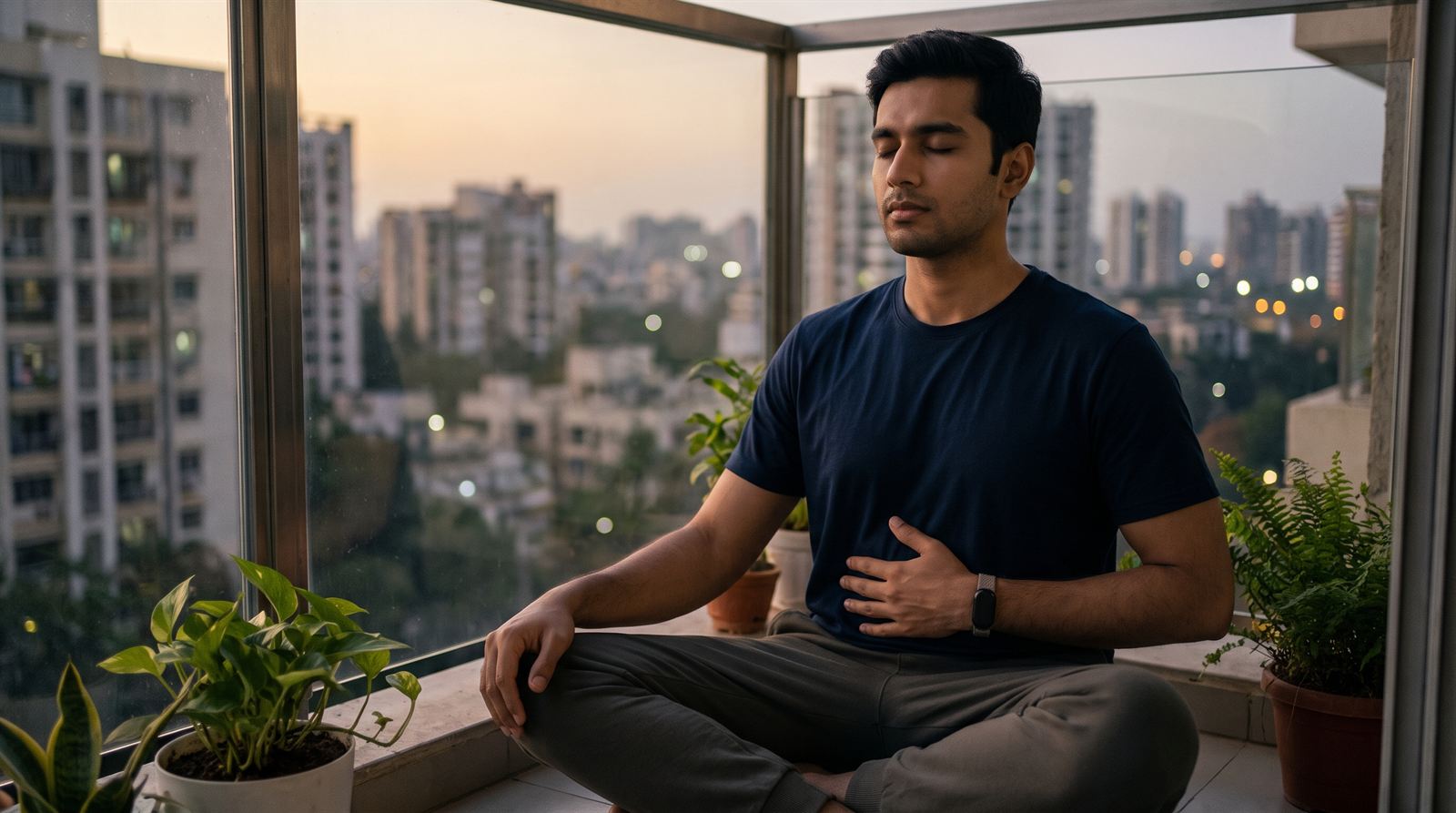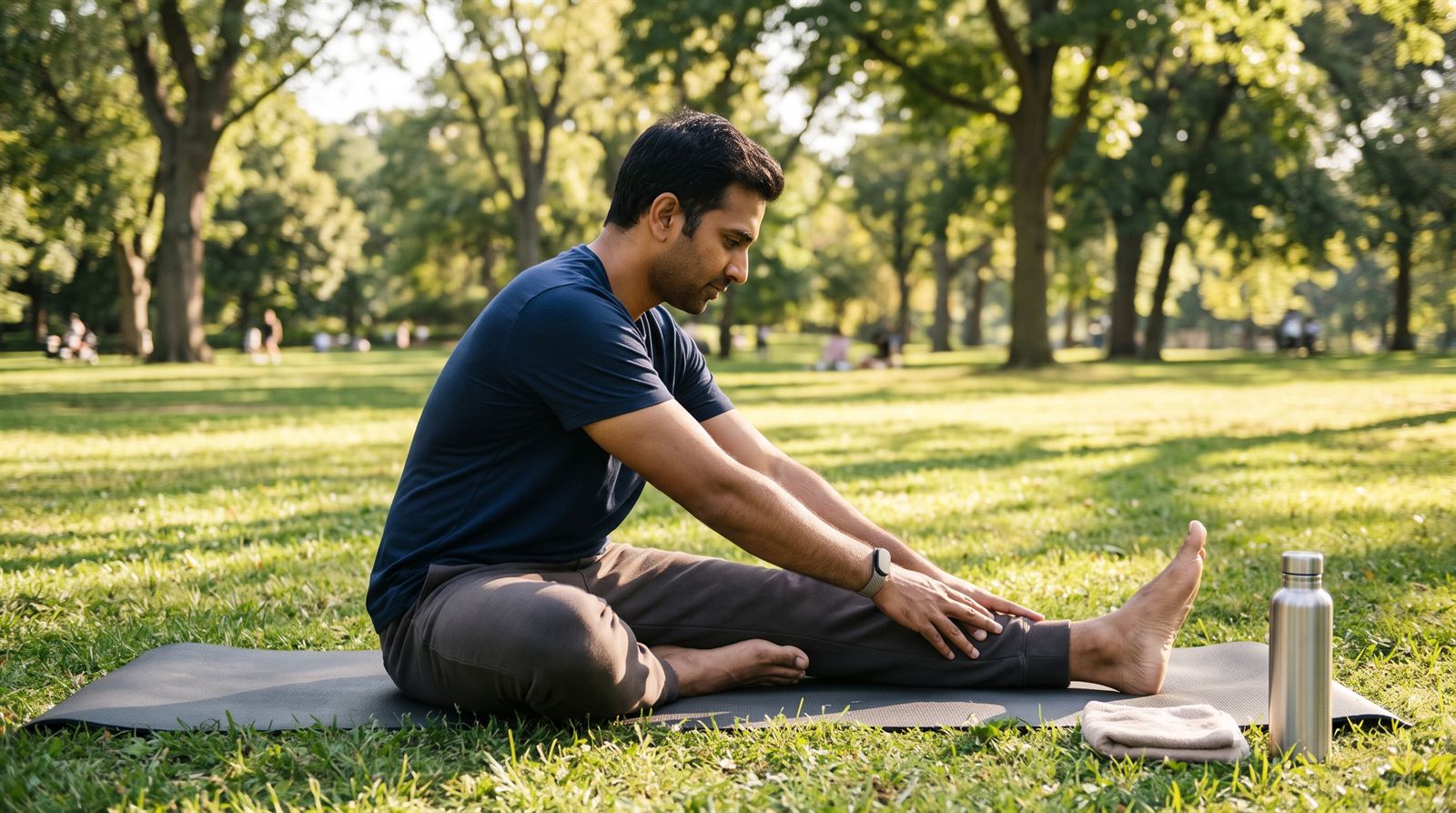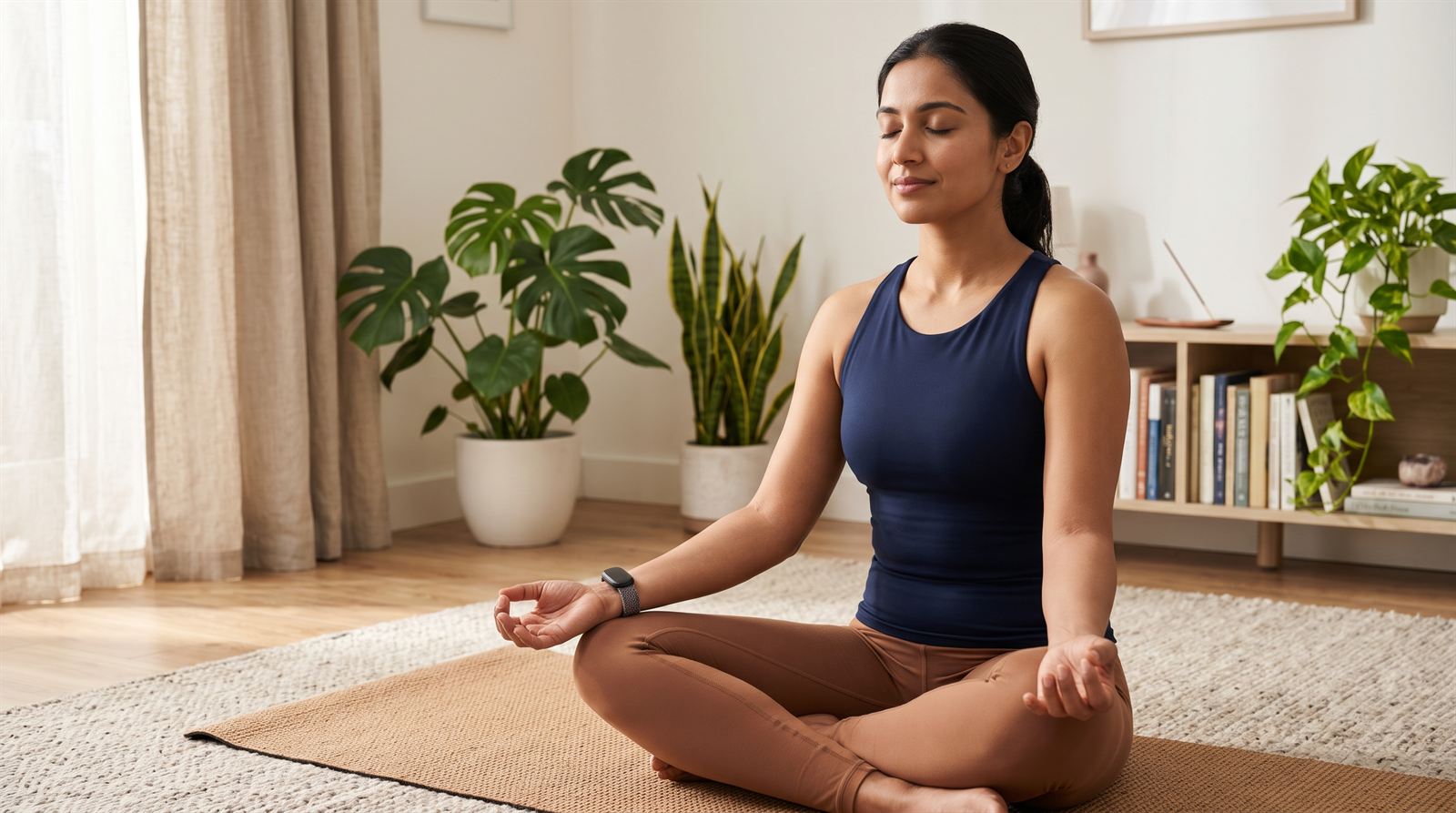
Yoga is one of India's great gifts to the world. It builds strength, flexibility and balance, and it calms the mind. So where does a fitness tracker fit into something so focused on inner awareness?
The answer is: quietly. A good band shouldn't distract you on the mat. But over weeks and months, it can show you something that's hard to feel day to day: how your practice is changing your body's response to stress, sleep and recovery.
Why a screenless band suits yoga
A smartwatch with a bright screen and buzzing notifications is the opposite of what you want during savasana. A screenless band like SynQ has no display to glance at and no alerts pulling you out of the moment. You practise as normal and look at your trends later. Its soft woven strap is also comfortable in poses where your wrists bear weight.
Tip: in poses with lots of wrist pressure, like plank, chaturanga or arm balances, you can slide the band slightly higher up your forearm for comfort.
What a fitness band can show about your yoga practice
1. Consistency
Benefits come from regular practice. Seeing your sessions logged week after week is a simple, powerful motivator, especially when life gets busy.
2. Heart rate during different styles
Not all yoga is the same effort:
- Gentle, restorative and yin yoga usually keep heart rate low, similar to rest or an easy walk.
- Hatha sits in between, with effort rising in standing poses and balances.
- Vinyasa, power yoga and fast Surya Namaskar rounds can raise heart rate into moderate, even vigorous, zones.
This helps you balance your week. A flowing practice can count towards your cardio, while a gentle session is ideal on a recovery day.
3. How quickly you calm down
During pranayama, meditation and savasana, many people see their heart rate drop and settle. Over time, noticing how quickly you can bring your heart rate down after a strong flow is a nice way to see your relaxation response improving.
4. The bigger picture: sleep, stress and HRV
This is where tracking really shines. Some studies suggest that regular yoga and slow-breathing practices are associated with better sleep and higher heart-rate variability, a sign that the body is handling stress well. Everyone responds differently, and your band lets you see your own trends:
- Do you sleep better on days you practise in the evening?
- Does your morning HRV improve over a month of regular pranayama?
- Does your resting heart rate drift down as your practice deepens?
Using recovery data to plan your practice
Yoga also fits perfectly with recovery-based training:
- Feeling well recovered? A good day for a strong vinyasa or power flow.
- Under strain, after poor sleep, a hard workout or a stressful week? Choose restorative yoga, yin, gentle stretches or pranayama.
SynQ is designed to give you this kind of plain-language recovery guidance, so your practice supports your body rather than adding to its load.
A simple 15-minute evening practice for better sleep
- Balasana (child's pose): 1 minute
- Marjaryasana–Bitilasana (cat–cow): 1 minute, slowly with the breath
- Supta Baddha Konasana (reclined bound angle): 2 minutes
- Supta Matsyendrasana (reclined twist): 1 minute each side
- Viparita Karani (legs up the wall): 3 minutes
- Anulom Vilom (alternate-nostril breathing): 3 minutes, slow and gentle
- Savasana: 3 minutes
Then check your sleep data tomorrow morning, and over the next few weeks.
Practise for yourself, not the numbers. Use your band to notice patterns, not to judge a session. The best yoga practice is the one you enjoy and keep doing.
If you're pregnant, have high blood pressure, glaucoma, a back or neck problem, or are recovering from an injury, practise with a qualified teacher and check with your doctor, as some poses and breathing techniques may not be suitable.
This article is general wellness information, not medical advice. SynQ is a wellness product, not a medical device, and does not diagnose, treat or prevent any condition. If you have a health condition, are pregnant, or are worried about your sleep, heart rate or fitness, please speak to a doctor before changing your routine.