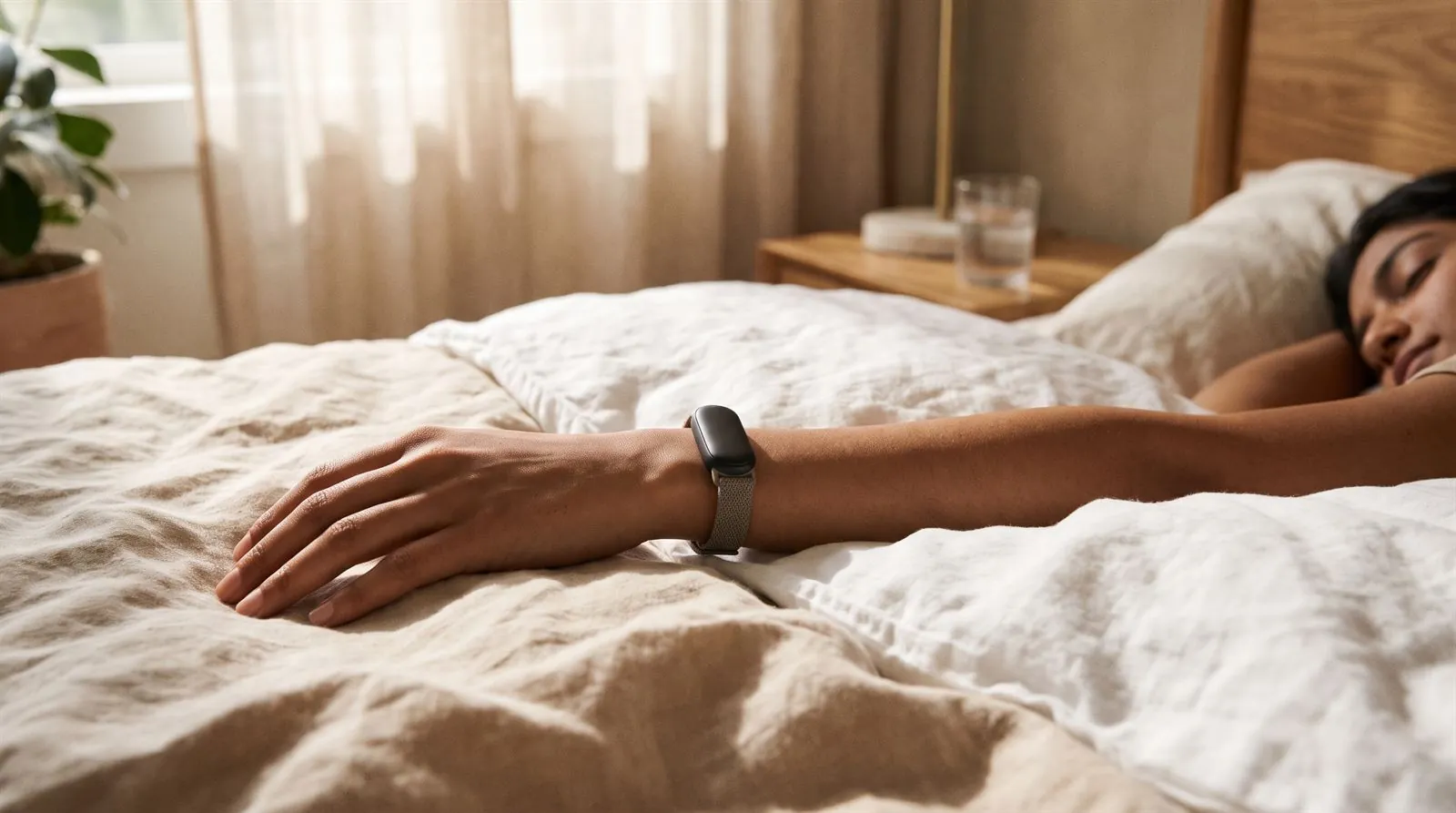
Of all the numbers a fitness band shows you, resting heart rate is the easiest to understand. It's simply how many times your heart beats in a minute when you're fully at rest. It doesn't need a lab, and you don't need to be an athlete to use it. Watched over weeks, it tells you a lot about your fitness, your sleep and how much strain your body is under.
1. What is a normal resting heart rate?
For most adults, a resting heart rate between 60 and 100 beats per minute is considered normal. Many fit, active people sit lower, in the 50s, and well-trained endurance athletes can rest in the 40s.
| Resting heart rate | What it usually means |
|---|---|
| Below 60 bpm | Common in fit, active people. Talk to a doctor if it comes with dizziness, fainting or tiredness. |
| 60–100 bpm | The normal adult range. |
| Above 100 bpm at rest | Higher than normal. Worth checking with a doctor if it stays there. |
Age, genetics, medication and body size all play a part, so two healthy people can have quite different numbers. As with HRV, your own trend matters more than any chart.
2. How to measure it properly
The best time is first thing in the morning, before you get out of bed, check your phone or drink tea or coffee. Later in the day, movement, food, caffeine and stress all push it up.
- By hand: find your pulse at the wrist or neck, count the beats for 30 seconds and double it. Do this on three mornings and take the average.
- With a band: a band worn overnight measures it while you sleep, when you're as still as you'll ever be. That gives a more consistent number than a quick daytime check.
3. What pushes your resting heart rate up
A morning number that's 5–10 beats higher than your usual for a few days is your body asking for a lighter day. Common reasons:
- Short or poor sleep. One late night can show up the next morning.
- Alcohol. Even a couple of drinks often raise resting heart rate overnight.
- Hard training without enough recovery. A big week can keep it raised for a day or two.
- Heat and dehydration. Hot Indian summers and not drinking enough water make your heart work harder.
- Stress. Work deadlines and worry keep your "fight or flight" system switched on.
- Getting ill. A rise can show up a day before you feel a cold or fever coming.
- Late, heavy dinners and late caffeine. Your body is still busy digesting or stimulated when it should be resting.
4. How to lower it over time
Resting heart rate usually drifts down slowly as your heart gets fitter and your recovery improves. The habits that help most are simple:
- Regular easy cardio. Brisk walks, easy runs, cycling or swimming at a pace where you can still talk. Our guide to heart-rate zones explains why easy effort matters.
- Consistent sleep. Seven hours or more, at similar times each night.
- Less alcohol, and caffeine earlier in the day. See how caffeine and alcohol affect sleep.
- Stay hydrated, especially in the heat.
- Manage stress with breathing, a short walk or time away from screens.
Expect change over weeks and months, not days.
5. Resting heart rate and HRV: use them together
Resting heart rate counts how often your heart beats. Heart-rate variability (HRV) looks at the tiny changes in timing between those beats. They often move in opposite directions: on a well-recovered morning, resting heart rate tends to be at or below your usual and HRV at or above it. When both point the wrong way, it's a strong sign to go easy today.
When to see a doctor: if your resting heart rate is regularly above 100, or below 60 with dizziness, fainting, chest pain or breathlessness, or if your heartbeat often feels irregular, get it checked. A fitness band is a wellness tool, not a diagnosis.
Resting heart rate questions, answered
What is a good resting heart rate by age?
The normal range of 60–100 bpm applies across adult ages. Rather than chasing a "perfect" number for your age, track your own baseline and look for changes from it.
Is a low resting heart rate good?
In active, healthy people, a lower resting heart rate usually reflects good fitness. A low number with symptoms like dizziness or fainting is different, and worth discussing with a doctor.
Why is my resting heart rate higher this week?
The usual causes are short sleep, alcohol, hard training, heat, stress or an illness starting. Look at what changed in the last few days, ease off, and it typically settles back.
How SynQ uses resting heart rate
SynQ is a screenless fitness tracker you wear day and night. Each morning it compares your resting heart rate, HRV, sleep and activity with your own baseline and gives one call for the day: Train, Go easy or Recover. The planned launch price is ₹10,999 and the daily cue is free with the band. SynQ is a wellness product, not a medical device. Join the waitlist for the launch date and first access.
About SynQ: one daily cue each morning: Train, Go easy or Recover. The planned launch price is ₹10,999, and the daily cue is free with the band. See pricing.
This article is general wellness information, not medical advice. SynQ is a wellness product, not a medical device, and does not diagnose, treat or prevent any condition. If you have a health condition, are pregnant, or are worried about your sleep, heart rate or fitness, please speak to a doctor before changing your routine.