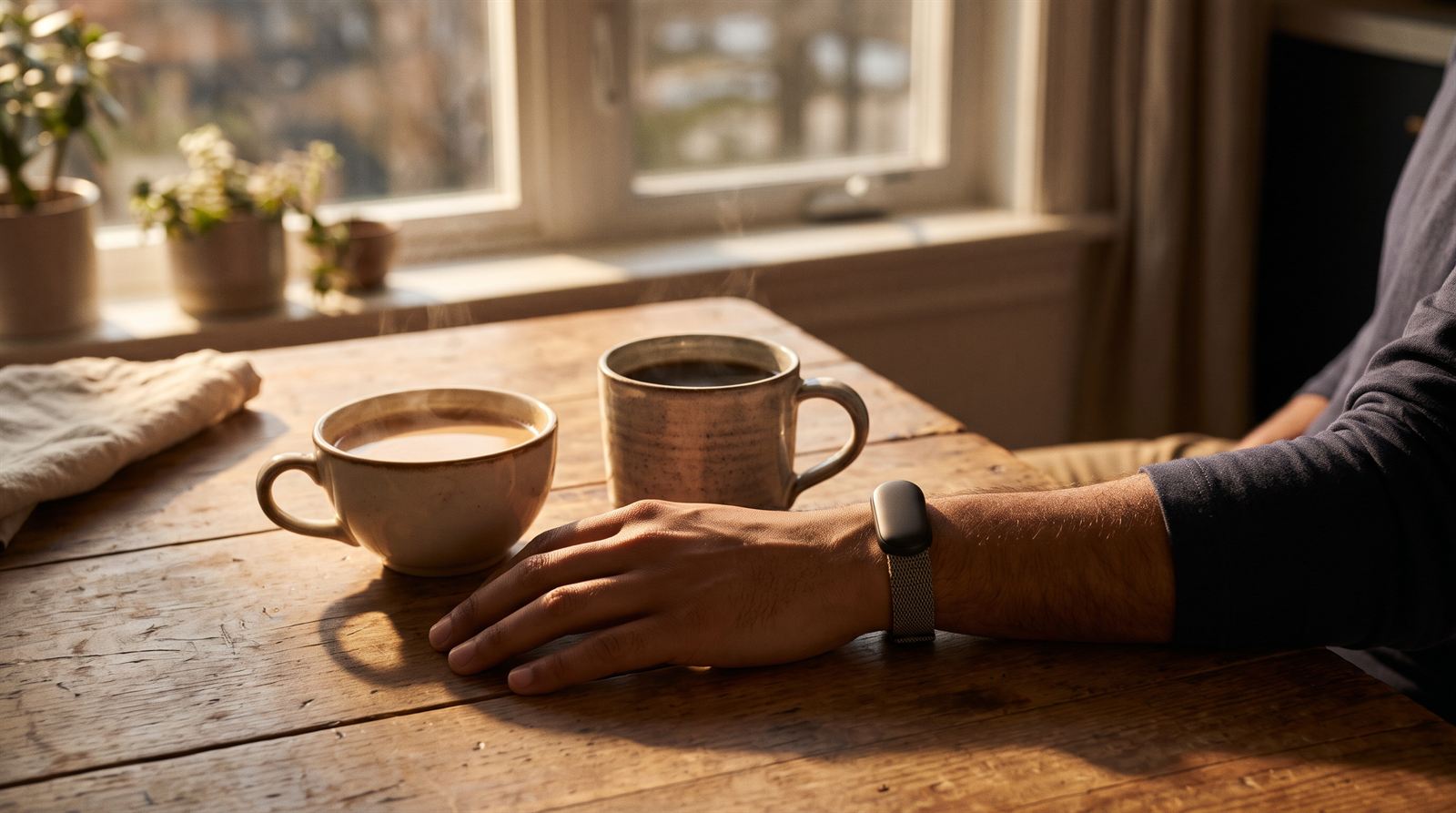
For many of us, the day runs on chai or coffee, and the weekend sometimes includes a drink or two. You don't need to give these up to live healthily. But it helps to understand how they affect your sleep and recovery, because the effects are often bigger than people expect.
Caffeine: it lasts longer than you think
Caffeine blocks the chemical signals that make you feel sleepy. That's great at 9 am, less great at 11 pm. Your body clears caffeine slowly: several hours after a cup, a good share of it can still be active, and some people are much more sensitive than others.
Even if you can fall asleep after an evening coffee, caffeine can make your sleep lighter and less refreshing.
Sensible caffeine habits
- Set a cut-off time, often around 2 pm, or at least 8 hours before bed.
- Remember hidden caffeine: strong tea, cold coffee, colas, energy drinks and dark chocolate.
- Switch your evening cup to herbal tea, haldi doodh or decaf.
- Delay your first cup a little after waking, and drink water first.
Alcohol: it helps you fall asleep, then disturbs sleep
Alcohol can make you drowsy, so it seems to help sleep. But as your body processes it during the night, sleep usually becomes more broken, especially in the second half of the night. Many people also notice:
- A higher resting heart rate overnight
- Lower HRV the next morning
- Waking up more, or earlier, and feeling less rested
The more you drink, and the closer to bedtime, the bigger the effect tends to be.
Sensible alcohol habits
- Drink less, and earlier in the evening, with food.
- Alternate with water.
- Plan alcohol-free days each week.
- Skip hard workouts the morning after. Choose a walk or yoga instead.
What your sleep tracker band reveals
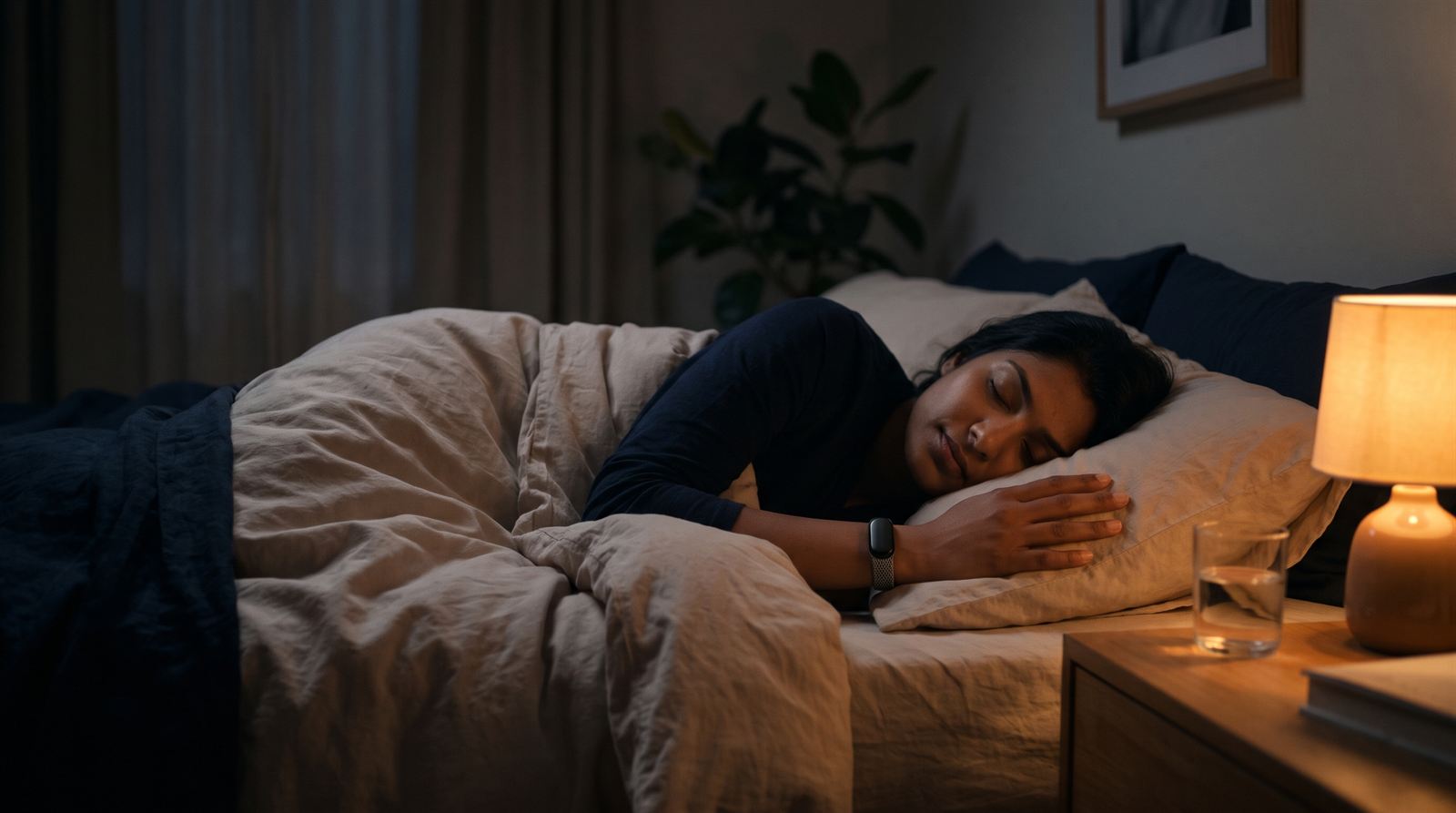
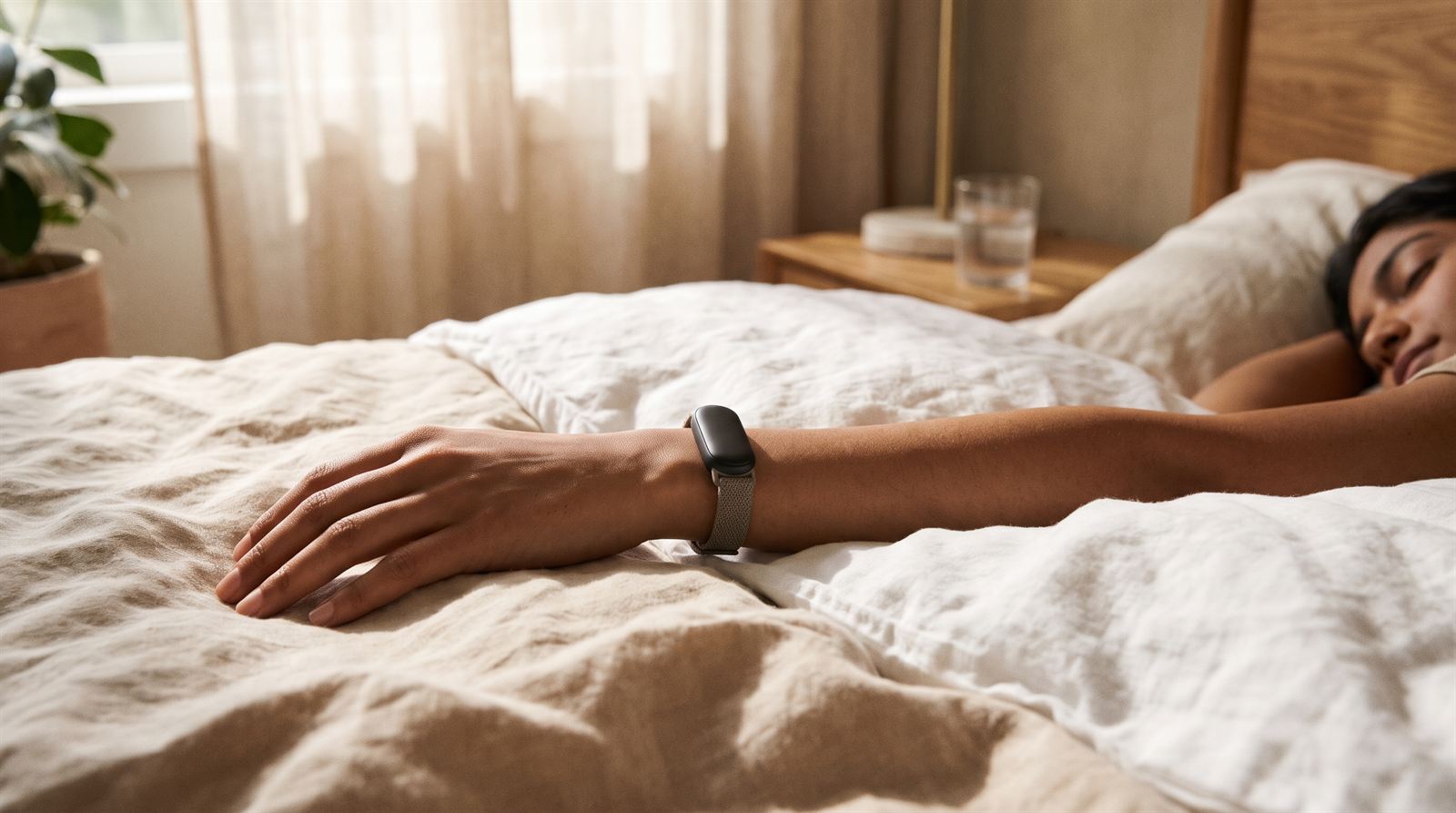
This is one of the clearest things a fitness band can show you. Because SynQ is designed to track your heart rate and HRV while you sleep, you can see your personal response:
- Compare nights with an afternoon coffee vs. none.
- Compare nights with alcohol vs. without. Many people are surprised how long it takes for their heart rate to settle.
- Watch your recovery trend during weeks with more or fewer drinks.
Seeing your own data is often more motivating than any general advice.
The 2-week experiment: no caffeine after 2 pm and no alcohol for 14 days. Then compare your average sleep, resting heart rate and HRV with the two weeks before.
If you're pregnant, have a heart condition or take regular medication, ask your doctor about caffeine and alcohol. If you're worried about your drinking, talking to a doctor is a good first step.
This article is general wellness information, not medical advice. SynQ is a wellness product, not a medical device, and does not diagnose, treat or prevent any condition. If you have a health condition, are pregnant, or are worried about your sleep, heart rate or fitness, please speak to a doctor before changing your routine.