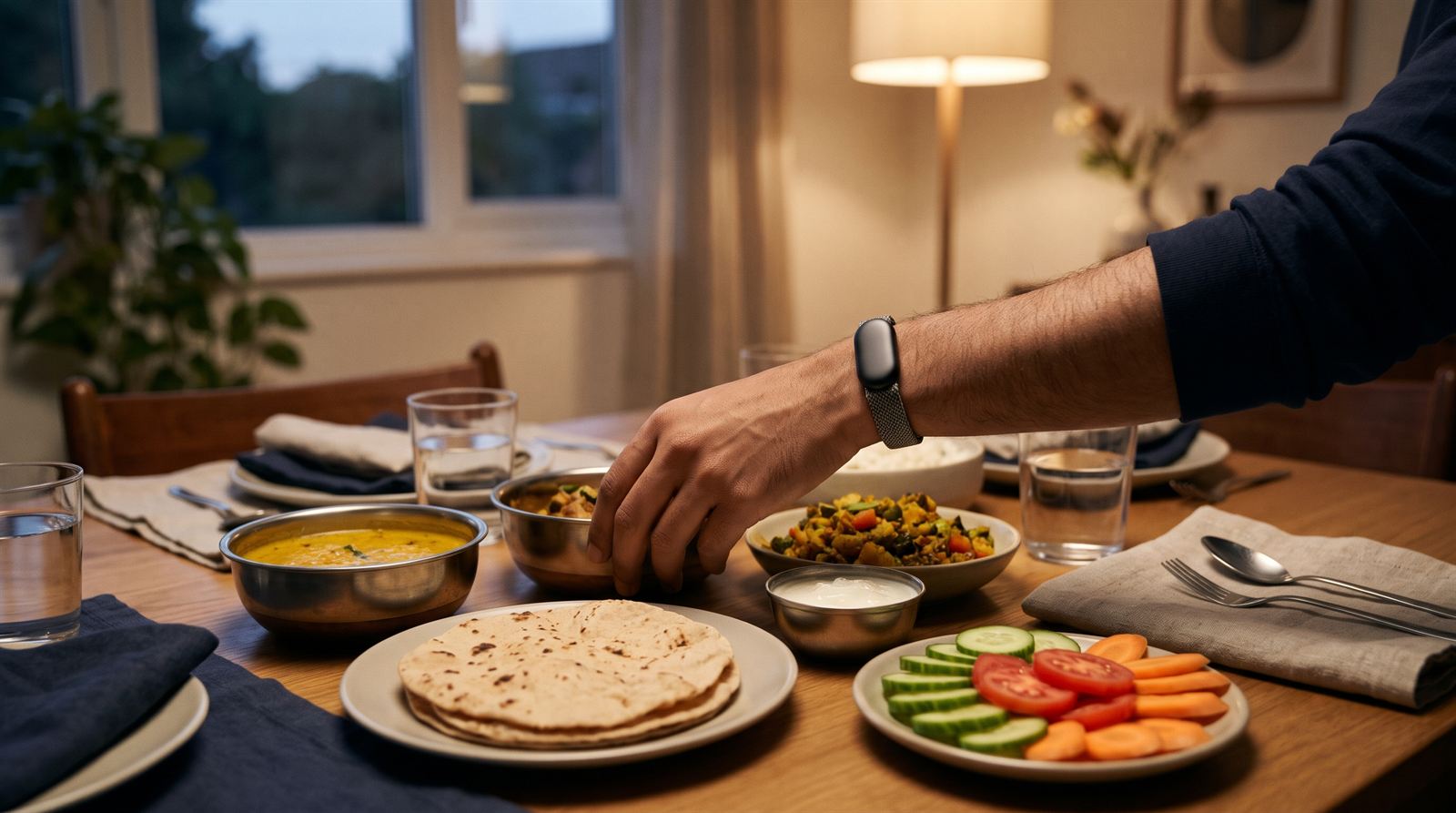
In many Indian homes, dinner happens late: after a long commute, after the kids' homework, after the evening news. Then it's straight to bed. It feels normal, but your body may be working hard on digestion just when it's trying to rest.
What happens when you eat late
Digestion takes energy. After a large meal, your heart rate typically rises for a while as your body processes the food. If you lie down soon after, many people find that:
- They take longer to fall asleep or sleep more lightly.
- Acidity and heartburn are more likely, especially after spicy or fried food.
- Their resting heart rate stays higher for part of the night.
- They wake up feeling less refreshed.
A simple target: 2 to 3 hours
A common, practical guideline is to finish your last big meal about 2 to 3 hours before bed. If you sleep at 11 pm, that means dinner by around 8 to 8:30 pm. It isn't always possible, and that's fine. Aim for most nights, not every night.
Habits that make it easier
- Make lunch the bigger meal if dinner has to be late.
- Have a planned evening snack around 5 to 6 pm (fruit, roasted chana, sprouts, a handful of nuts) so you're not starving at night.
- Keep late dinners lighter: dal, khichdi, roti with sabzi, curd. Save the heavy, fried or very spicy food for earlier in the day or weekends.
- Watch the portion, not just the time.
- Take a 10-minute walk after dinner. It helps digestion for many people and adds steps.
- Avoid lying down straight after eating.
How a fitness band shows the effect
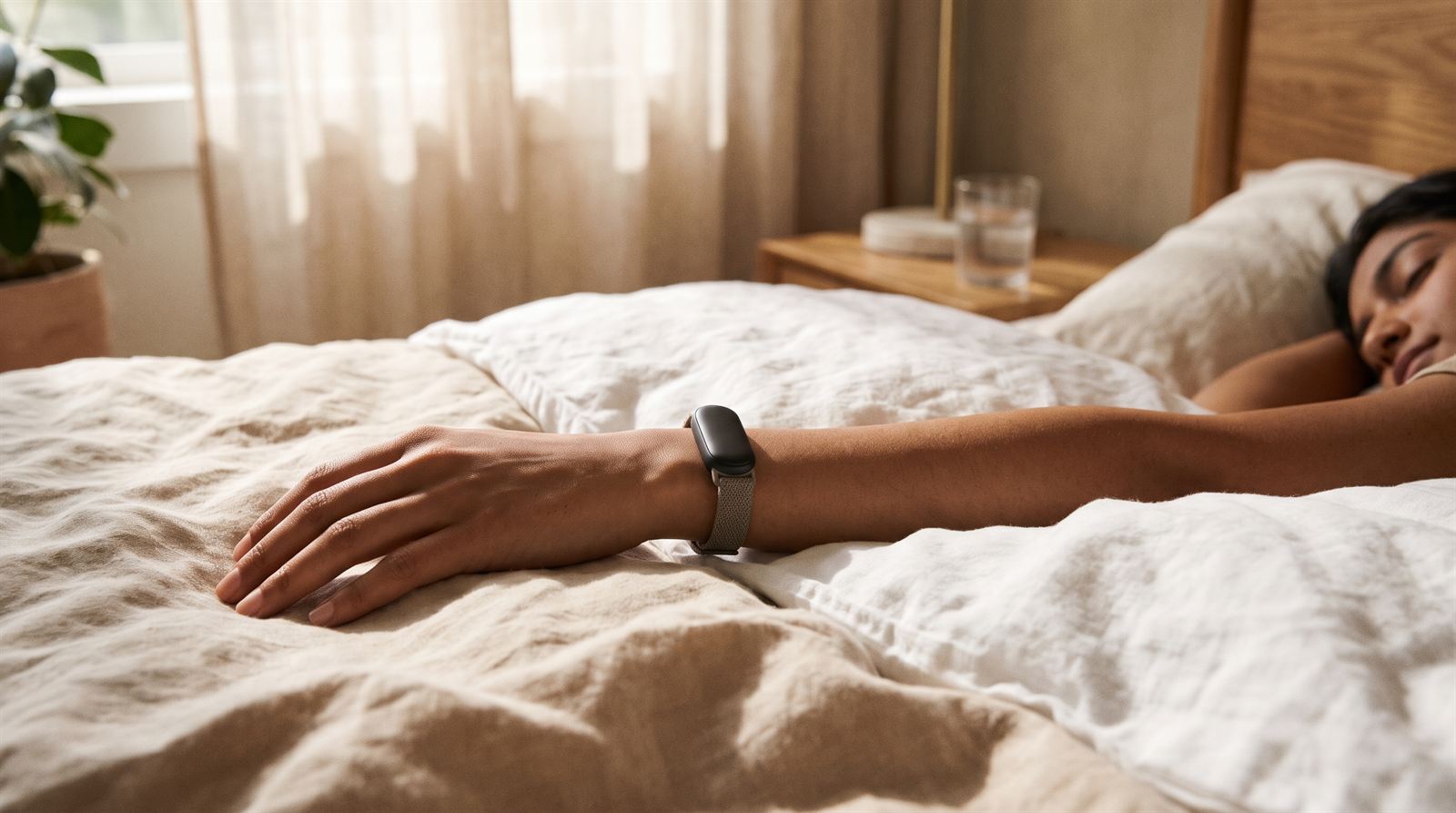
Meal timing is one of the habits where tracking can be eye-opening. A band like SynQ follows your heart rate and HRV through the night. Many people notice that after a late, heavy dinner:
- Night-time heart rate takes longer to settle to its usual low.
- HRV is lower the next morning.
- Sleep looks more broken.
Everyone is different, so run your own experiment:
The 2-week dinner test: for one week, eat as you normally do. The next week, finish dinner at least 2.5 hours before bed. Compare your average sleep, resting heart rate, HRV and how you feel in the morning.
If you have diabetes, acid reflux or another health condition, follow your doctor's advice on meal timing. Some people need regular evening meals or snacks.
This article is general wellness information, not medical advice. SynQ is a wellness product, not a medical device, and does not diagnose, treat or prevent any condition. If you have a health condition, are pregnant, or are worried about your sleep, heart rate or fitness, please speak to a doctor before changing your routine.