If you could pick only one healthy habit, sleep would be a strong choice. It affects your energy, mood, focus, appetite and how well you recover from exercise. Health bodies generally recommend that adults get at least 7 hours a night, yet late work calls, long commutes and phones in bed mean many of us regularly fall short.
The good news: you don't need a perfect routine. You need a consistent one.
1. Fix your wake-up time first
Most sleep advice starts with bedtime. It's often easier to start with the other end. Pick a wake-up time you can keep every day, including weekends, within about 30 to 60 minutes. Your body clock learns from that anchor, and you'll naturally start feeling sleepy at a more regular time at night.
Big weekend lie-ins feel good, but they act like mini jet lag: Monday morning becomes harder.
2. Count back to a realistic bedtime
If you need to wake at 6:30 am and want 7.5 hours of sleep, you need to be asleep by about 11 pm, which means being in bed by around 10:40 pm. Most people take 10 to 20 minutes to fall asleep.
3. Build a 30-minute wind-down
Your brain needs a signal that the day is over. Choose two or three of these and do them in the same order each night:
- Dim the lights in your home
- Put your phone on charge outside the bedroom, or at least out of reach
- A warm shower
- Light stretching or a few minutes of slow breathing
- Reading a paper book
4. Make the room cool, dark and quiet
A slightly cool room helps most people sleep. In Indian summers, a fan or AC on a timer, light cotton bedding and blackout curtains can make a real difference. Earplugs or a white-noise fan help with traffic and neighbours.
5. Watch the "sleep stealers"
Caffeine late in the day, alcohol, heavy late dinners and late-evening workouts can all make sleep lighter or shorter. You don't have to give anything up. Just notice the pattern. (We cover this in caffeine, alcohol and sleep and late dinners and sleep.)
How a sleep tracker band helps
A routine only sticks if you can see it working. This is where a sleep tracker band is genuinely useful:
- It shows your real sleep time, not your time in bed. Many people are surprised to find they spend 8 hours in bed but sleep closer to 6.5.
- It shows consistency. Seeing your bedtimes drift by two hours across a week is a strong nudge.
- It connects cause and effect. Compare nights after a late coffee or a late dinner with nights without. Your resting heart rate and HRV often tell the story too.
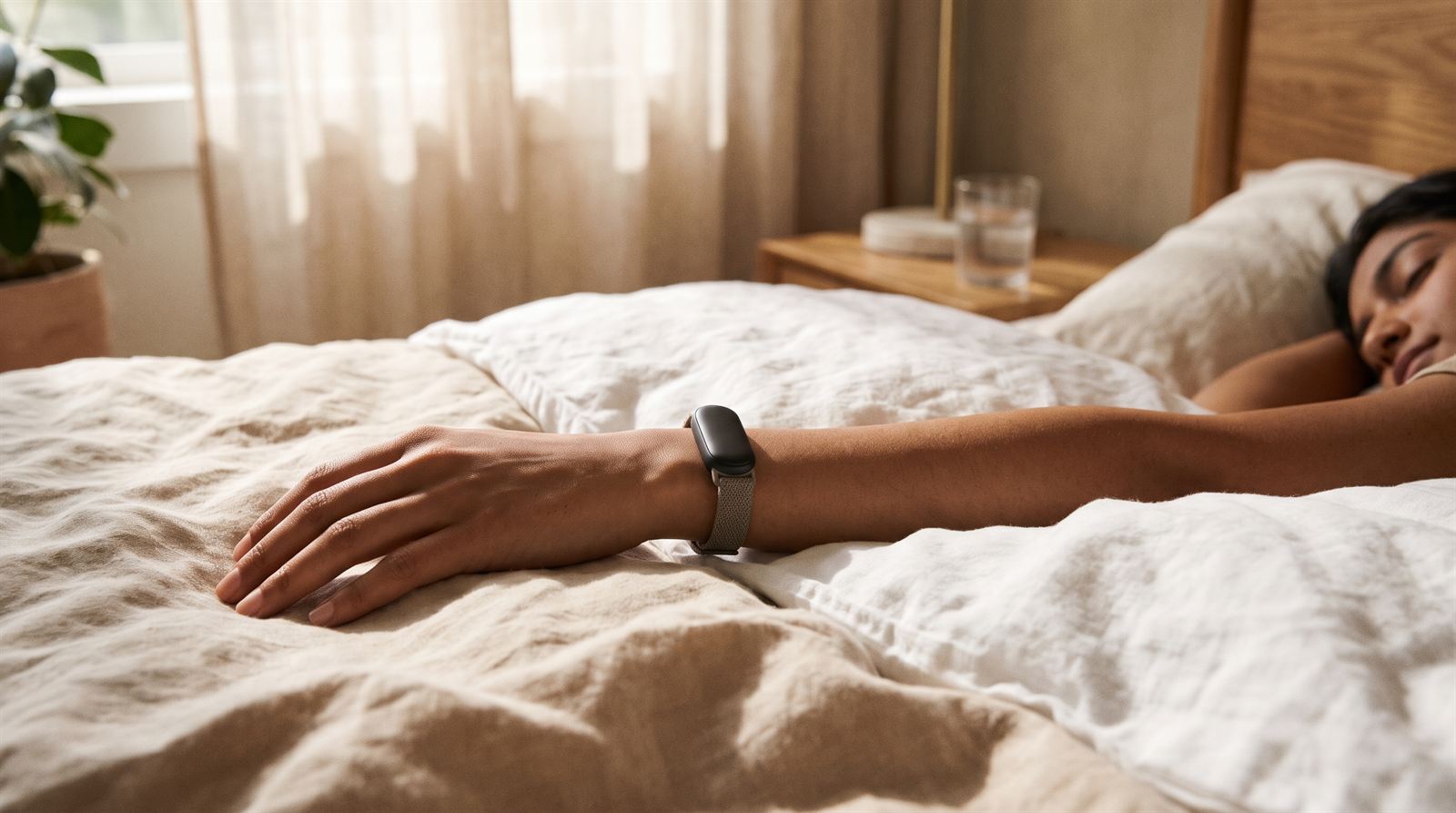
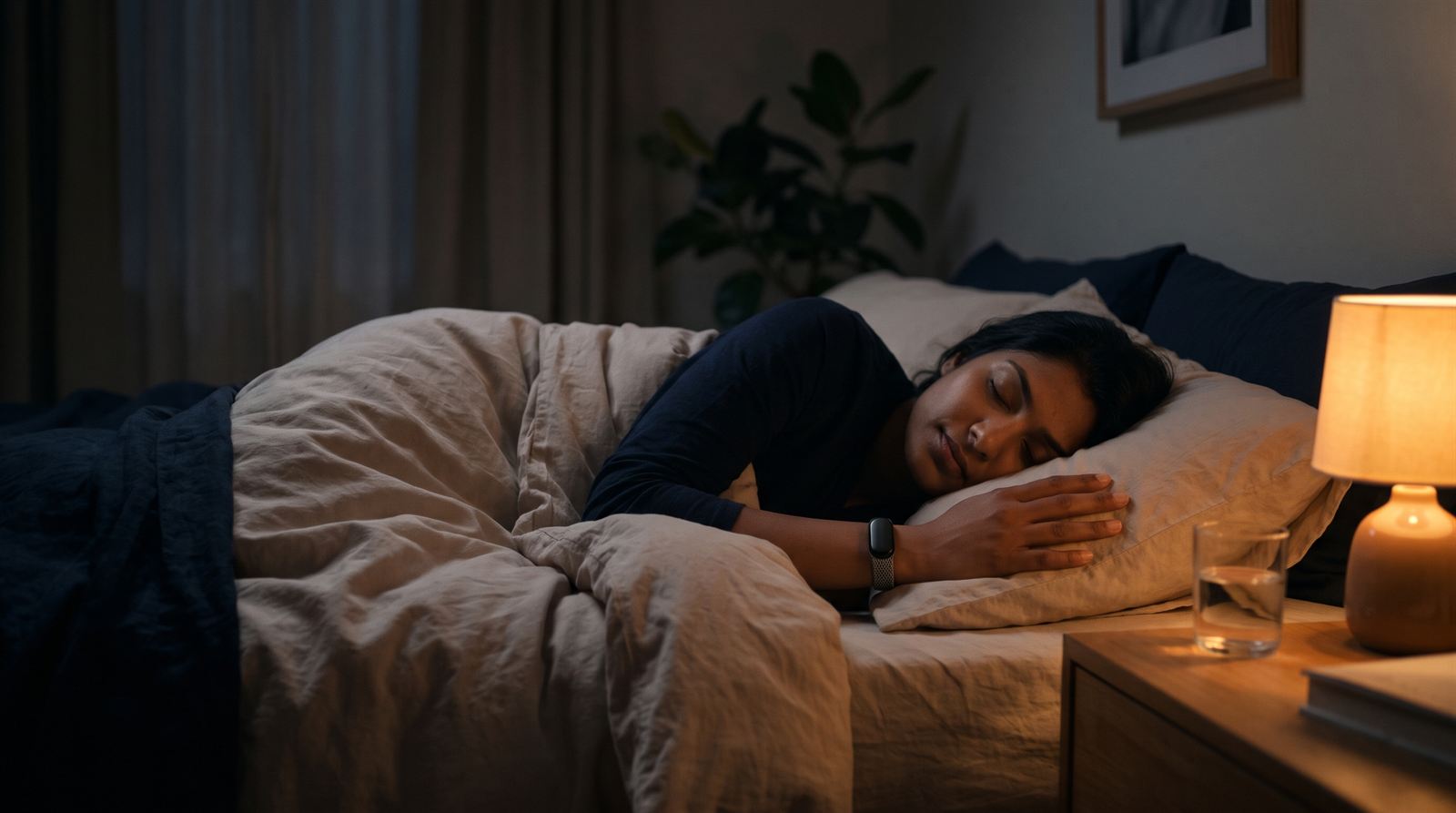
- A screenless band won't disturb you. A band like SynQ has no bright screen to light up at night, so it's comfortable to wear while you sleep.
Try this for 14 days: keep the same wake-up time every day and do the same short wind-down each night. Don't judge single nights. At the end, compare your average sleep and your morning energy with the two weeks before.
When to see a doctor
If you snore loudly, wake up gasping, feel very sleepy during the day despite enough time in bed, or have struggled with sleep for months, talk to a doctor. A fitness band can show patterns, but it can't diagnose sleep conditions.
This article is general wellness information, not medical advice. SynQ is a wellness product, not a medical device, and does not diagnose, treat or prevent any condition. If you have a health condition, are pregnant, or are worried about your sleep, heart rate or fitness, please speak to a doctor before changing your routine.