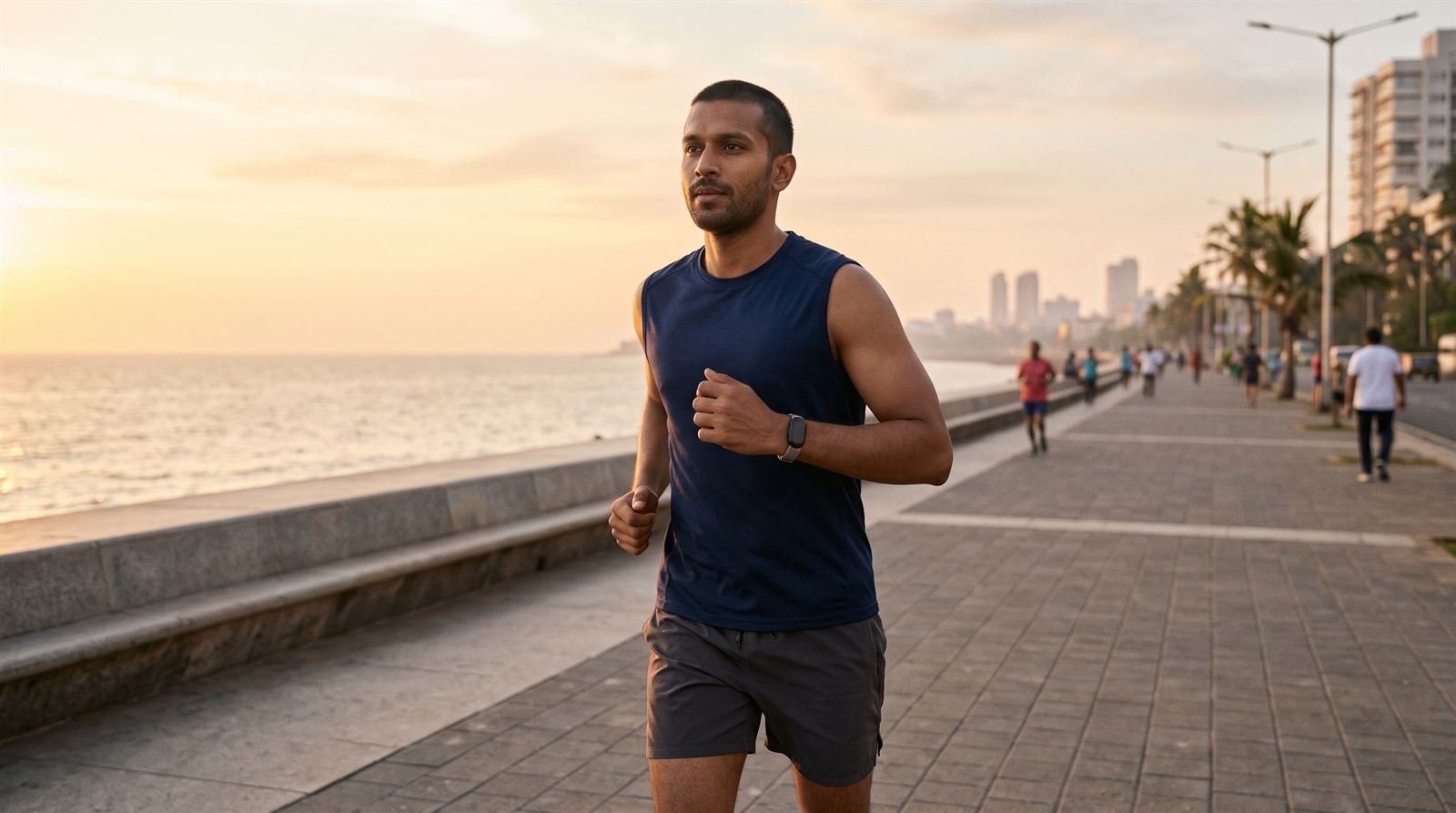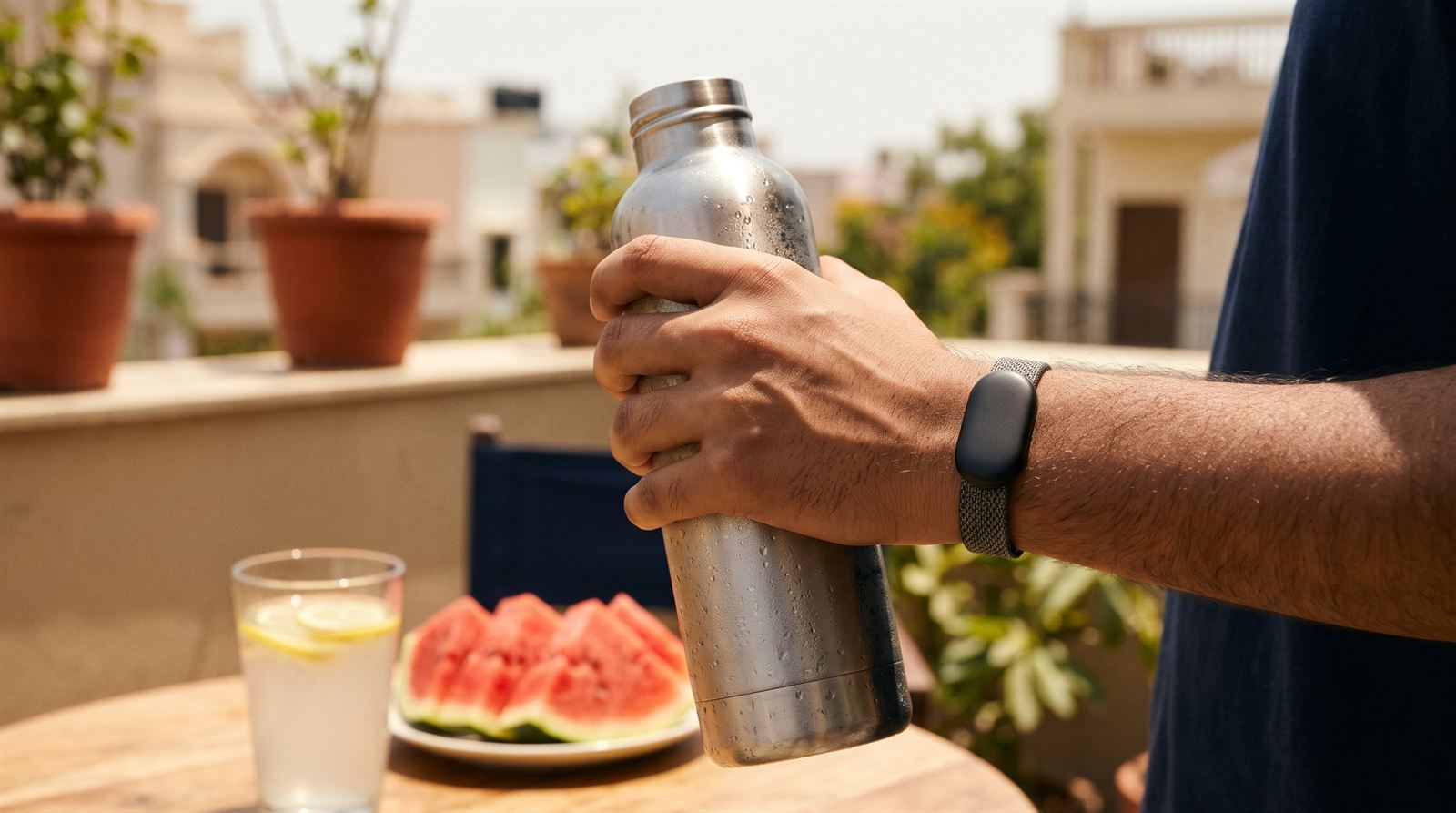
Feeling tired, foggy or headachy by mid-afternoon? Before you reach for another coffee, try a glass of water. Mild dehydration is common, especially in hot, humid Indian summers, in AC offices where you don't feel thirsty, and on busy days when you simply forget.
How much water do you need?
There's no single number that fits everyone. Your needs depend on your size, the weather, how active you are and what you eat. (Dal, curd, fruit, buttermilk and tea all contribute.) Two simple checks work better than counting glasses:
- Thirst: drink when you're thirsty, and don't ignore it.
- Urine colour: pale straw-yellow is generally a good sign. Dark yellow usually means drink more.
You'll need more on hot days, when you sweat a lot, during exercise and when you're unwell. If you have a heart or kidney condition, ask your doctor how much is right for you.
Habits that make drinking enough easy
- A glass of water when you wake up, before tea or coffee.
- Keep a bottle in sight at your desk, in your bag and in the car.
- Link water to existing habits: a glass with every meal, every time you return from a meeting.
- Eat water-rich foods: watermelon, cucumber, oranges, curd and buttermilk.
- Drink before, during and after exercise, more in the heat.
- Add electrolytes when you sweat heavily: nimbu pani with a pinch of salt, coconut water or an ORS solution after long, sweaty sessions.
- Slow down in the evening so you're not up at night for the bathroom.
Don't forget the heat itself
In peak summer, the problem isn't only water. It's heat. Exercise early in the morning or in the evening, wear light, loose clothing and take breaks in the shade. Dizziness, confusion, nausea or stopping sweating in the heat are warning signs: stop, cool down and get help if they don't pass quickly.
Can a fitness band tell if you're dehydrated?
Not directly. A wrist band doesn't measure water levels in your body. But your heart rate often reacts to heat and fluid loss. When you're hot or under-hydrated, your heart usually has to work harder, so:
- Your heart rate during exercise may run higher than usual for the same pace or effort.
- Your resting heart rate may be higher and your HRV lower after a hot, sweaty day, or after a night of poor sleep in the heat.
Those signals have other causes too, including stress, illness, alcohol and hard training. But if you see your usual walk or run suddenly needing a much higher heart rate on a hot day, it's a good prompt to slow down, drink and cool off.
That's the kind of trend SynQ is designed to surface in plain language: not "you are dehydrated", but "your body is working harder than usual today".
Simple rule for summer workouts: if your heart rate is much higher than normal for the same effort, ease off. Hot days are for maintaining fitness, not setting records.
This article is general wellness information, not medical advice. SynQ is a wellness product, not a medical device, and does not diagnose, treat or prevent any condition. If you have a health condition, are pregnant, or are worried about your sleep, heart rate or fitness, please speak to a doctor before changing your routine.